Table of contents
Travel guides promise certainty, yet the most memorable days on the road often begin with a stranger’s pen and a half-improvised detour, especially in Japan where neighborhoods still run on small, human routines. In 2024, inbound tourism has rebounded strongly, and the pressure on “must-see” corridors has pushed many visitors to look for something quieter and more specific. That is where local, real-life itinerary surprises matter, not as cute anecdotes, but as a practical way to travel better, spend smarter, and see places that rarely trend.
A napkin map beats your algorithm
How often does a screen nudge you into the same loop? Recommendation engines are excellent at reinforcing what millions already clicked, and in Japan that feedback loop can be brutal, with Kyoto’s Gion and Arashiyama, Tokyo’s Shibuya and Asakusa, and Osaka’s Dotonbori repeatedly resurfacing as if the country were a set of five neighborhoods. The result is measurable, and not just in your camera roll; Japan National Tourism Organization figures show the country welcomed 25.07 million international visitors in 2023, and the monthly records in 2024 have repeatedly underscored how fast the flow returned, concentrating on the same gateways and corridors. When that many people chase the same pins, the “optimal route” becomes a slow-moving line.
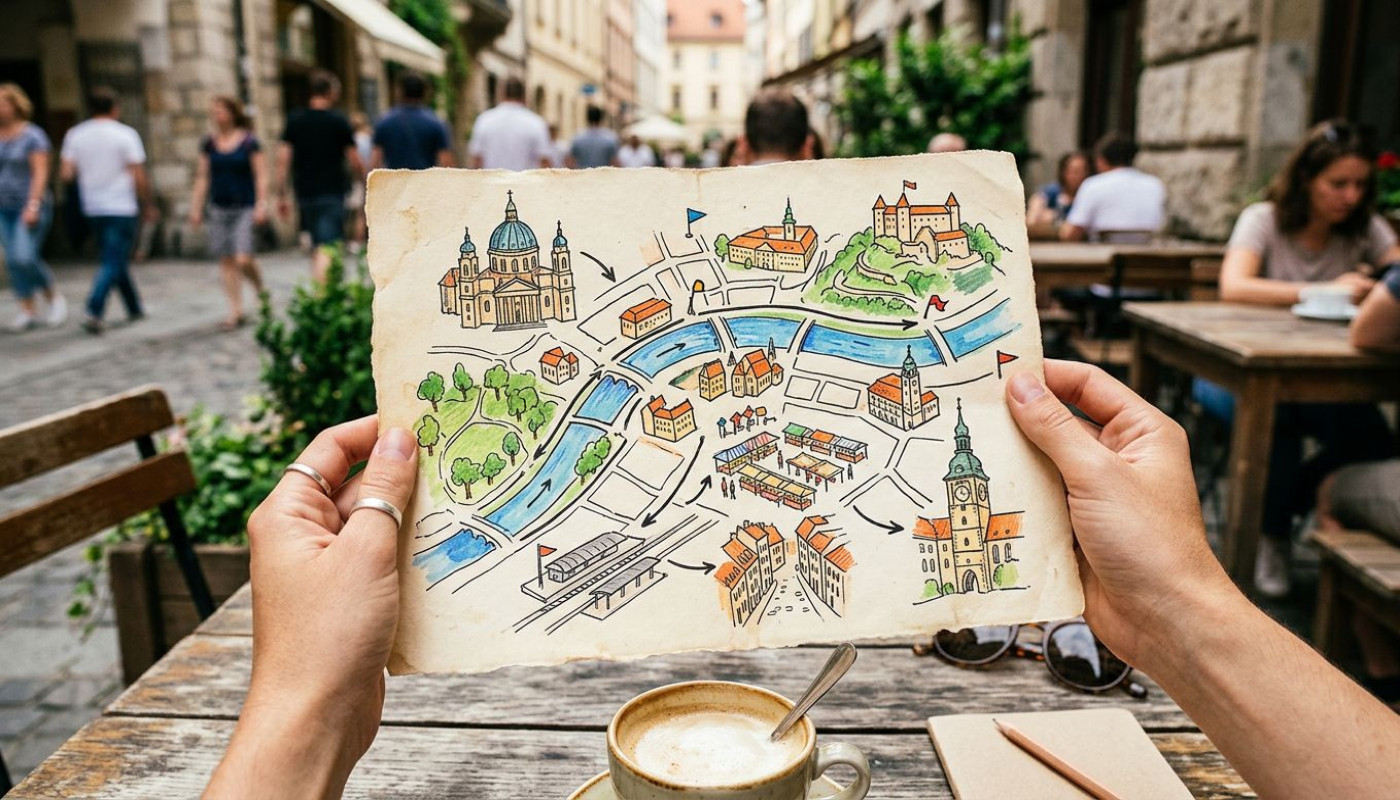
A local sketch, by contrast, is built on lived constraints: the bakery that sells out by 11, the shrine that feels different before school lets out, the footbridge with the best evening light because the sun hits it at a low angle in winter. It is not romanticism, it is logistics, and it can reshape a day from the first train onward. In Tokyo, a shopkeeper’s suggestion to cut through Yanaka on foot can replace an hour of transfers with a quieter sequence of alleys, cats, and small temples; in Fukuoka, a bar owner might point you to a yatai row that is calmer on weekdays, saving you a long wait and a higher bill. These are micro-decisions, yet they compound into time saved and money redirected toward what you actually value, whether that is a better lunch or a later check-out.
That local map can also protect you from “false efficiency”, the common trap where a route looks short in minutes but costs you in fatigue. Japan’s rail network is famous for punctuality, and JR passenger rail still moves vast numbers daily, yet not every connection is painless when you factor in station size, stairs, platform distances, and the simple reality of carrying luggage. A resident will often route you around that friction, swapping one big interchange for two smaller stops, or steering you to a bus that tourists overlook because it is not as heavily marketed in English. The surprise is not just the destination, it is the flow.
Small towns, big wins for budgets
Overtourism is no longer an abstract debate; it is an everyday travel cost. In high-demand pockets, accommodation rates rise, restaurants tighten reservations, and “walk-in” spontaneity disappears, particularly during peak sakura weeks, Golden Week, and autumn foliage season. Japan’s consumer inflation has also been a headline topic over the past two years, and while the weak yen has made Japan feel “cheaper” for many foreign currencies, that advantage can evaporate quickly in the hottest districts where demand sets the price. Locals, however, know where the value sits this month, not where it sat on a blog post last year.
A classic example is the day-trip that becomes a half-day. Residents often recommend arriving earlier, taking a different line, and returning via another town that you would never have picked from a top-ten list. That turns one expensive cluster into two modest stops, with lunch in a family-run place that still serves set meals at a fair price. In Kansai, stepping off the main Kyoto axis into Shiga’s lakeside neighborhoods can cut accommodation costs while keeping rail access; in the Tokyo region, using Chiba’s coastal towns or Saitama’s heritage areas as bases can mean larger rooms and less competition. The surprise is not exoticism for its own sake, it is price elasticity: places with similar access and atmosphere can have very different bills.
The financial difference shows up fast when you cost a day as a traveler rather than a tourist. Consider the practical math: a popular café district where you wait 45 minutes for lunch and then pay a premium dessert price versus a quieter local strip where you sit in five minutes and spend less, and you have effectively “bought” an extra activity with time and savings. Transport adds another layer; choosing a route that reduces redundant backtracking can cut paid entries and repeated fares, even if you still lean on an IC card. In regions where a rail pass no longer makes sense for all itineraries, that kind of local advice becomes more valuable than ever, because it is anchored in what you will actually do, not in a theoretical maximum of trains.
If you want to plan with that mindset, without flattening everything into generic “hidden gems”, tools that map prefecture-level realities can help, and try this site as a starting point for understanding how places relate beyond the usual tourist corridors. The key is to use any resource the way a resident would: not to stack attractions, but to stitch together neighborhoods, seasons, and transit in a way that keeps your day breathable.
Why their detour feels more “Japan”
What does “authentic” even mean in 2026? The word is abused, yet travelers still use it to describe a simple sensation: being somewhere that is not performing for them. Local itinerary surprises tend to deliver that sensation because they are rooted in ordinary life, and ordinary life is what most visitors never see between major landmarks. A resident might send you to a small shopping street for a morning coffee because the owner knows your hotel area is dead before 10, or to a riverside path where grandparents walk after dinner, and suddenly the country feels less like a checklist and more like a place.
There is also a cultural logic to how these routes unfold. Japan is dense with “in-between” spaces that don’t photograph like icons, yet they tell you how the city works: neighborhood shrines tucked between apartment blocks, school routes lined with small safety flags, community centers that host craft markets, sento bathhouses that still anchor evening routines. Locals include these because they are part of their mental map, not because they are rated 4.6. The detour becomes a narrative, and your day gains rhythm: a stop for seasonal sweets, a short walk, a quiet viewpoint, and then the big site when the light is right and the crowds thin.
Seasonality matters, too, and locals instinctively travel by calendar rather than by “best of” pages. Hydrangea season in early summer can transform modest temple gardens into color fields; winter illuminations can make a suburban park worth the train ride; late-afternoon markets can define a small city more than its museum. In Japan, where weather, festivals, and school schedules shape movement, residents plan around moments, and that is why their sketch often feels like it reveals a more truthful country. You are not simply “seeing” Japan; you are moving through it the way it moves through the week.
How to invite better surprises safely
Want the surprise, not the stress? The trick is to design a day with slack, and then let one local recommendation fill it. That means booking the immovable pieces, a morning train, a timed museum entry, a dinner reservation if you care about a specific counter, and leaving a two- to three-hour window uncommitted. When someone draws you a route, you can say yes without breaking your whole plan, and you can also say no politely if the suggestion is too far or too weather-dependent. The best surprises are compatible with your constraints, not heroic deviations.
Practical safety is mostly about clarity and consent. Ask for specifics, not just “go there”: which exit, which landmark, which side of the tracks, what time it gets busy, whether cash is needed. Japan is broadly safe, yet travelers can still get into trouble by missing the last train, underestimating rural distances, or arriving at a place that quietly requires reservations. Locals will usually warn you about these pitfalls if you prompt them, and staff at hotels, cafés, and tourist information centers are often the best sources because they translate daily reality into visitor-friendly instructions. If you are traveling solo, share your rough plan with someone, keep your phone charged, and save the address in Japanese as well as in English for taxi backups.
There is also an ethical side to “local secrets”. If a resident suggests a small site, treat it gently: keep noise down, follow signage, and avoid turning a quiet lane into a photo set. The goal is not to “discover” and broadcast, it is to experience and move on. In a year when Japan is actively balancing tourism growth with community comfort, travelers who adopt that mindset will keep access open for everyone. The best compliment you can pay a local sketch is to behave like you belong there for ten minutes, and then leave it as you found it.
Your next step, with numbers in mind
Book key trains early in peak weeks, and price your days realistically: mid-range hotels in hot districts can spike, while nearby secondary cities often stay calmer. Set a daily budget for transport and meals, keep cash for small shops, and ask accommodations about local discount tickets and city passes. Build one flexible window per day, and let a local fill it.
On the same subject

Maximizing Your Stay: Choosing The Right Luxury Apartment For Industry Events

Understanding Portuguese Social Security: A Guide To NISS For Expats
